
2026 Ford F-150 vs 2026 Toyota Tundra
Updated July 2026 by Savvy Dealer Inc.

The Ford F-Series has been the champ for over half a century. When drivers think of pickups, the F-150 is always the first truck that comes to mind. Now in its fourteenth generation, it continues to offer endless choices for every type of buyer. Let's dive into the details to see how it measures up against a tough competitor like the Toyota Tundra.
Key Takeaways:

- Ford and Toyota made minor changes to their pickups.
- Multiple engine choices are available across Ford trims; in comparison, Toyota gives you just one option for the Tundra.
- The F-150 is the most powerful tower in its segment.
Updates in the 2026 Ford F-150 vs. the Toyota Tundra

Ford swapped out Avalanche and Darkened Bronze paint colors for Space White Metallic and Marsh Grey. To give the F-150's premium trims a sleeker exterior, the factory-installed keyless entry keypad moves to a dealer-installed accessory. Ford also tweaks its BlueCruise software to provide a more seamless hands-free highway driving experience.
You get an overwhelming number of choices when customizing the 2026 Ford F-150. The core lineup features six distinct trims--the XL, STX, XLT, Lariat, Platinum, and King Ranch--alongside trail-ready models like the Tremor, Raptor, and Raptor R. Depending on what you need, Ford lets you mix and match regular, SuperCab, and SuperCrew body styles with three different bed lengths. And when it comes to what's under the hood, the powertrain lineup is massive. (We'll get into that in a bit!)
The Tundra's models now include a standard tow hitch with a 7/4-pin trailer harness and a bigger 32.2-gallon fuel tank. The mid-tier Limited trim gains leather upholstery, while double-cab configurations get rear console HVAC vents for improved backseat climate control.
Powertrain Choices in the Ford F-150 vs. Toyota Tundra

Ford's engine options are the stuff of legend, giving buyers one of the most diverse mechanical lineups in the entire full-size truck segment. No matter your choice, it mates to a 10-speed automatic transmission, with rear- or four-wheel drive.
- 2.7L twin-turbo V6: 325 hp, 400 lb-ft (19 city / 25 highway)
- 5.0L V8: 400 hp, 410 lb-ft (16 city / 24 highway)
- 3.5L twin-turbo V6: 400 hp, 500 lb-ft (18 city / 24 highway)
- 3.5L twin-turbo V6 (Raptor): 450 hp, 510 lb-ft (14 city / 18 highway)
- 3.5L hybrid V6: 430 hp, 570 lb-ft (25 city / 26 highway)
- 5.2L supercharged V8 (Raptor R): 700 hp, 640 lb-ft (10 city / 15 highway)
The Tundra offers one engine, a 3.4-liter twin-turbo V6. The base (SR) model delivers 348 horsepower, while the other trims enjoy 389 horsepower. It pairs with a 10-speed automatic and RWD or 4WD.
| 2026 Ford F-150 | 2026 Toyota Tundra |
|---|---|
| A turbocharged 2.7L EcoBoost V6; 5.0L naturally aspirated V8; Raptor-specific tuning for 3.5L twin-turbo V6; 3.5L PowerBoost full hybrid V6; 5.2L supercharged V8 (Raptor R only) | 3.4-liter twin-turbo V6 |
| 10-speed automatic transmission | 10-speed automatic transmission |
| RWD or FWD | RWD or FWD |
F-150 vs Tundra Towing Capacity and Payload Limits
When it comes to pure towing muscle, the F-150 is an absolute powerhouse. If you configure a SuperCrew cab with the 3.5-liter V6, four-wheel drive, and the 6.5-foot cargo bed, you can tow up to 13,500 pounds. For hauling, a rear-wheel-drive Regular Cab with an 8-foot bed can carry a 2,445-pound payload.
The Tundra's towing max is 12,000 pounds when properly set up, and its payload capacity stops at 1,940 pounds, falling behind Ford's 3,250-pound overall capability.
The Mighty Ford F-150 Surpasses Its Competitors in Power and Options
Ford chose not to reinvent the wheel with the F-150 this year, which is exactly why truck buyers love it. In short, you know exactly what you're getting--a pickup that's reliable and built to handle your workload. If you are ready to experience it for yourself, reach out to our team at Brighton Ford today!
Learn more

2026 Ford F-150 vs 2026 Ram 1500
The Ford F-150 has held onto the crown as the best-selling half-ton pickup out there since the mid-70s and has always fought off the competition. But Dodge won't back down, especially with the surprise return of its fan-favorite Hemi V8 in the Ram 1500. Let's take a closer look at this heated rivalry below!

2026 Ford F-150 vs 2026 Chevy Silverado 1500
The full-size pickup truck market has long been defined by fierce competition between two American staples: the Ford F-150 and the Chevrolet Silverado 1500. For 2026, both trucks continue to push the limits of capability, technology, and everyday versatility. Whether you need serious towing power for work, dependable performance for daily driving, or advanced tech for comfort and convenience, these two pickups remain among the most popular full-size truck options.

2026 Ford F-150 vs 2026 GMC Sierra 1500
For more than fifty years, the Ford F-Series has set the pace for the American truck market, and the 2026 model year proves that dominance is set in stone for the next fifty years. Now deep into its 14th generation, the F-150 remains the undisputed heavyweight champ, offering a level of versatility and tech that rivals like the 2026 GMC Sierra 1500 can't quite catch up to. If you’re deciding which half-ton belongs in your driveway, here’s how the newest F-150 and Sierra 1500 stack up in today’s

2026 Ford F-150 STX vs XLT
Which truck is right for your needs, the 2026 Ford F-150 STX or XLT? Choosing between these light-duty pickups comes down to whether you’re after sporty styling (at a great price, we might add) or enhanced comfort and convenience (which comes at a slightly higher, yet still budget-friendly price). Without further ado, let’s take a side-by-side look at these F-150 trim models.

2026 Ford F-150 Tremor vs Raptor
When you’re shopping for a truck that’s as serious about performance as it is about off-roading, the best-selling truck offers two incredible options: the 2026 Ford F-150 Tremor and Raptor. Which better suits your rugged Colorado adventures? Our comparison guide will help you decide!

2026 Ford F-150 vs 2025 Ford F-150
The Ford F-150 is the bestselling truck in the US Market, and it has been for years now, thanks to its consistent quality and class-leading customization and versatility. In this review of the F-150 features by year, we’ll be going in-depth on everything you can expect from the 2026 iteration of the beloved F-150.

2025 Ford F-150 STX vs XLT
The F-150 is Ford’s best-selling pickup, but which trim is best suited for your needs? In today’s review of the Ford F-150, we’ll be doing an intensive comparison on two of the most popular models in the lineup, the STX and XLT trims, giving you the low down on what each model does so well in the 2025 model year.

2025 Ford F-150 Lariat vs Tremor
In this review, we’ll be going in depth on what you can expect out of the latest iteration of the Ford F-150 as we pit the Lariat vs Tremor head on in this comparison of their features, specialties, and key considerations when looking into either model. Which truck should you choose?

2025 Ford F-150 Raptor vs Tremor
Two trucks are uniquely qualified to take on Colorado’s boulder-heavy terrain: the 2025 Ford F-150 Raptor and Tremor! But which off-road F-150 trim model should you choose? Keep reading to get up-close and personal with each of these full-size trucks.

2025 Ford F-150 King Ranch vs Platinum
Two premium full-size trucks — the 2025 Ford F-150 King Ranch and Platinum — deliver two very distinct experiences! We’re here to help you figure out which of these full-size luxury pickups is right for your cruise around the Denver metro area and into the Rockies.

2025 Ford F-150 STX
The 2025 Ford F-150 STX is one of the best vehicles to buy if you want something budget-friendly, but don’t want to give up on features. We’ll be taking a look at what makes this the best option over other trims and even other models on the market.

2025 Ford F-150 XLT
To enjoy well-rounded comfort and brawny performance at an outstanding price, choose the 2025 Ford F-150 XLT. A wide range of upgrades help you build a stronger, more luxurious ride that suits your budget!

2025 Ford F-150 vs 2025 GMC Sierra 1500
Whether you’re heading into the Rockies or hauling cargo across Brighton, the 2025 Ford F-150 and GMC Sierra 1500 can assist you on your quest. But which of these full-size, light-duty trucks makes the most sense for your lifestyle? Without further ado, here’s our guide on how to choose between the 2025 F-150 and Sierra 1500!

2025 Ford F-150 vs 2025 Chevy Silverado 1500
Both the 2025 Ford F-150 and Chevy Silverado 1500 are as American as apple pie — but do they live up to the hype? Our comparison guide helps you select the best full-size truck for Colorado work and play.

2025 Ford F-150 vs 2025 Toyota Tundra
While the 2025 Ford F-150 is part of a longstanding best-in-class tradition, the 2025 Toyota Tundra has been steadily gaining ground. But which of these full-size, light-duty trucks is better suited for life in Colorado? Our comparison guide helps you make the most of your new ride!

2025 Ford Super Duty vs 2025 Ford F-150
While the 2025 Ford F-150 is a strong option, the 2025 Ford Super Duty is an even stronger one! But which is right for your Colorado drive, Ford’s best-selling light-duty truck or its heavy-duty one? We’re here to help you make the right choice.

2025 Ford F-150 vs 2025 Ram 1500
Which light-duty truck is the best fit for your Colorado lifestyle, the 2025 Ford F-150 or the 2025 Ram 1500? Our buying guide is here to help you select the model that has everything you want in a daily driver or light duty truck.

2025 Ford F-150 vs 2024 Ford F-150
The Ford F-150 continues to be one of the most iconic pickups ever made. Going into 2025, its legend is stronger than ever. Let’s take a look at what the latest model year has to offer in comparison to 2024 to see which model year best fits your needs.

Ford F-150 Used Buying Guide: Known Issues
The Ford F-150 might be America’s bestselling truck, but no one’s perfect. Before you hit the used truck market, our handy buying guide is here to help you explore the F-150’s known issues!

2025 Ford F-150 Lariat
The 2025 Ford F-150 Lariat is a full-size truck that walks the line between rugged performance and rich interior comfort. This handsomely equipped truck is just waiting for you to unleash the power and sophistication of the Lariat in the Colorado landscape!

2025 Ford F-150 Hybrid
In Colorado territory, the 2025 Ford F-150 hybrid proves its worth, delivering both terrain-friendly power and admirable fuel economy. Better still, this full-size truck transforms your everyday cruise with its roster of modern features!

2025 Ford F-150 Raptor R
Not only can the 2025 Ford F-150 Raptor R travel further into the rugged terrain than other off-roading trucks, but it also gets there faster! And with its luxurious lineup, this full-size truck helps you make the most of your wild adventures.

2024 Ford F-150 King Ranch
Part workhorse and part luxury truck, 2024 Ford F-150 King Ranch serves up everything from best-in-class towing capabilities to a leather-trimmed cabin. And thanks to its handsome Southwestern theme, this full-size truck sets itself apart from other upscale models!

2024 Ford F-150 Tremor
Equipped with an incredible range of off-road-ready performance gear, the 2024 Ford F-150 Tremor is ready for action. This adventurous truck is also an excellent option for drivers shopping for weekday utility, sporty styling, and rich interior comfort!

2024 Ford F-150 Raptor R
More powerful and capable than ever before, the new 2024 Ford F-150 Raptor R is the best-in-class off-road racer. This high-speed full-size truck is loaded with everything you need to fully explore even the wildest trails. Plus, the Raptor R delivers the kind of high-end comfort and style you expect to see in one of the F-150’s more luxurious trim models!

2024 Ford F-150 vs 2024 Ford Ranger
While the 2024 Ford F-150 delivers best-in-class performance and exclusive tech features, the redesigned 2024 Ford Ranger is more powerful than ever before. Which is better suited to your needs, Ford’s midsize truck or its full-size truck? Keep reading to find out.

2024 Ford F-150 vs 2024 Ford Super Duty
To choose between the 2024 Ford F-150 and 2024 Ford Super Duty, it’s important to ask yourself just how much truck you need. Our comparison guide is here to help you figure out whether you’re better off with the light-duty F-150 or the heavy-duty Super Duty.

2024 Ford F-150 vs 2024 Toyota Tundra
Which is the best truck for the job, the 2024 Ford F-150 or the 2024 Toyota Tundra? Our buying guide takes a closer look at each of these popular full-size trucks. Before the end, you’ll know which model has all the features you want in a daily driver.

2024 Ford F-150 vs 2024 Chevy Silverado 1500
Which full-size truck will give you the most power and the best performance, the 2024 Ford F-150 or the 2024 Chevy Silverado 1500? Let’s take a side-by-side look at these popular American pickups to see which one comes out on top!

2024 Ford F-150 XLT Hybrid
In the 2024 Ford F-150 XLT Hybrid, you can move serious weight with maximum fuel economy. As the F-150’s mid-level trim model, this full-size truck is also a great option for anyone who wants lots of features at a reasonable price.

2024 Ford F-150 Lariat Hybrid
With the 2024 Ford F-150 Lariat Hybrid, you’ll enjoy both a luxurious ride and a potent combination of power and efficiency. This year, Ford gave its bestselling light-duty pickup truck quite a few updates, including a handsome new exterior design and some tech upgrades!

2023 Ford F-150 Tremor
For truck buyers seeking raw power and superior off-road capabilities, the 2023 Ford F-150 Tremor combines the traditional strength of the F-150 with even better technology in an upgraded trim. It stands out as the top choice in the F-150 lineup for those planning to venture off the paved path, and with all the added capabilities that this year’s models offers, we know you’re going to love what the new Tremor has in store.

2023 Ford F-150 Limited
It’s about time to indulge yourself in a truck that is embracing limitless luxury. If it’s in the budget, with the 2023 F-150 Limited, you know you’re going to get one of the most reliable, recognizable trucks there is with all the added features of comfort you could possibly fathom. This exceptional truck combines functionality with opulence, offering a plethora of perks and upgrades that will elevate your driving experience day-to-day, and is going to make a difference in all the ways that act

2023 Ford F-150 Platinum
If you're searching for a touch of luxury in your F-150 lineup without wanting to break the bank, the 2023 Ford F-150 Platinum is the perfect middle ground for all your needs. This trim is offering a host of premium features that elevate your driving experience while keeping your budget in mind. It’s a cut above the average in every way. With the F-150's renowned legacy and the Platinum's added perks, you can truly celebrate the best of both worlds with one of the best trucks there is on the mar

2023 Ford F-150 vs Ram 1500
The F-150 and the Ram 1500 are easily the top dogs in the half ton pickup class, and although they both are great vehicles, our comparison guide can help you choose which one is better for you.

2023 Ford F-150 vs Chevy Silverado 1500
What are the truck enthusiasts debating about this year? That would be if the new 2023 Ford F-150 or the 2023 Chevy Silverado 1500 is the truck to buy! Our guide is here with all you need to know.

2023 Ford F-150 Platinum vs Limited
Which luxury truck should you choose, the 2023 Ford F-150 Platinum or Limited? Our comparison guide shows you what you can expect from each F-150 trim model!

2023 Ford F-150 vs Toyota Tundra
Which model has what you want in a light-duty truck, the 2023 Ford F-150 or Toyota Tundra? These popular pickups are both strong, modern options, but we think one gives you more advantages than the other. Let’s take a look.

2023 Ford F-150 vs 2022 Ford F-150
Which should you choose, the 2023 Ford F-150 or the 2022 Ford F-150? Is there even much of a difference between these two bestselling pickups? Our buying guide is here to help you figure out which light-duty truck belongs in your driveway.

2022 Ford F-150 vs 2022 Toyota Tundra
With everything they have in common, the 2022 Ford F-150 and 2022 Toyota Tundra can offer a tough choice. But don’t worry, because we’re here to help you choose the best light-duty truck for your unique daily drive.

Used Ford F-150 Buying Guide
The Ford F-150 is a truck that continues to dominate in America and abroad. Quite possibly the most American vehicle ever made, this pickup continues to be the best-selling vehicle in America, and the best pickup. The F-150 is no fluff truck, it dominates because of its superior ability, reliability, and consumer focused options. This guide will help you purchase a used F-150.

2023 Ford F-150 Raptor R
The F-150 has been around for decades, and every generation continues to bring new innovations, more power, and impressive features. This year engineers must have had fun building the all new Raptor R. We have grown accustomed to the Raptor being the best of the best, with the most powerful engine the F-150 has to offer. However, the Raptor R has introduced an even more powerful engine, some fun cosmetic changes, and sets a new standard for an off-roading pickup. The F-150 Raptor R is at the top

2023 Ford F-150 Raptor
As off-road-ready as ever, the 2023 Ford F-150 Raptor is ready for your high-speed, desert-racing adventures. Although it’s built specifically for sandy trails, the Raptor has also been known to move through a wide range of terrains in complete style. Let’s take a look at everything this iconic light-duty pickup truck has to offer.

2026 Ford F-150
Since 1975, the Ford F-Series has been the truck to beat. Generation after generation, it’s the one people turn to for muscle, reliability, and the right mix of trims and options. Now in its 14th generation, the F-150 continues to cover just about every need a pickup buyer could have. Let’s take a closer look at what’s happening for 2026.

2026 Ford F-150 Lightning
Ford F-150 Lighting is the electric counterpart to the bestselling F-150, and has so far made a name for itself with its torque and acceleration figures, which, thanks to its motor design, are a cut above the normal F-150. In this review of the 2026 Ford F-150 Lightning range and specs, we’ll be going in-depth on all the latest you can expect from the Lightning Camp in the 2026 model year.

2022 Ford F-150 Lightning vs Chevy Silverado EV
The 2022 Ford F-150 Lightning and 2024 Chevy Silverado EV are competing for your attention with their tow-friendly, all-electric powertrains. How different are these all-new EV trucks? And which one is right for you? Our comparison guide has the answers you seek.

2022 Ford F-150 Lightning vs Chevy Silverado EV
The 2022 Ford F-150 Lightning and 2024 Chevy Silverado EV are competing for your attention with their tow-friendly, all-electric powertrains. How different are these all-new EV trucks? And which one is right for you? Our comparison guide has the answers you seek.

2022 Ford F-150 XL Trim
With a wallet-friendly starting price and a rugged, responsive performance, the 2022 Ford F-150 XL trim model is a popular option. Depending on how you configure yours, this entry-level F-150 model can tow a trailer weighing up to 14,000 pounds! Modern drivers love this full-size truck’s smartphone-friendly features lineup and roomy, accommodating cabin. What else do you need to know about the F-150 XL trim model? Let’s take a look.

2022 Ford F-150 XLT Trim
With its fair price and comfortable, modern cabin, the 2022 Ford F-150 XLT trim is an accommodating workhorse. This full-size truck is also pretty high-tech, delivering lots of smartphone-friendly features and driver safety aids at no extra cost.

2022 Ford F-150 Lariat Trim
With the 2022 Ford F-150 Lariat trim model, you’ll enjoy standard luxury, a powerful turbocharged performance, and a long list of options. Before you start shopping for yours, let’s take a closer look at this stylish full-size truck.

2022 Ford F-150 King Ranch Trim
With its exclusive styling, the 2022 Ford F-150 King Ranch trim model is unlike any of the other F-150s. This full-size truck appeals to drivers with great taste and a need for speed. Let’s take a closer look at this Western-themed pickup

2022 Ford F-150 Platinum Trim
Compared to Ford’s other upscale trucks, the 2022 Ford F-150 Platinum trim model has a very unique style. If the Platinum’s exclusive aesthetic turns you on, you’ll find there’s a lot more to love, including a powerful V8 performance and cutting-edge tech features.

2022 Ford F-150 Limited Trim
As the top-tier trim model, the 2022 Ford F-150 Limited is a very exclusive option. It supplies the best of everything you want in a full-size truck, from a high-powered performance to a features-rich cabin.

2022 Ford F-150 Raptor Trim
In the 2022 Ford F-150 Raptor trim model, desert racing just got a little more stylish. Not only is this full-size truck built for off-roading, but it also provides you with the means for a luxurious, tech-smart performance.

2027 Ford F-150 Preview
The 2027 Ford F-150 is coming soon, with a few updates. as there will not be a next gen F-series truck for a few years. For the upcoming model year Ford is rearranging the engine lineup with a new base V6 engine and more availability across the trims for higher powered engines. The 2027 F-150 is already available for order, meaning you can get started on configuring your truck ahead of the production schedule. Read on for what we know about the F-150 in 2027.

New Ford F-150 Lightnings
F-series is America’s best-selling truck for 44 years* for a reason. And now, it’s charging into the future with the all-new, all-electric 2022 Ford F-150 Lightning. It’s the first ever F-Series that’s gas-free and offers more purposeful technology, an elevated driving experience and trusted Built Ford Tough capability. Offering an ingenious array of connected, intelligent features with over-the-air Software Updates to help ensure your truck can get even better over time.

Ford F-150 vs Chevrolet Silverado 1500
The 2020 Ford F-150 and Chevrolet 1500 are two all-American trucks competing for the win. Wondering which tows the most? Or which truck offers more on-road comfort? Which can handle itself best in off-road territory? Our comparison guide has the answers you seek.

2020 Ford F-150
With its new hybrid powertrain and extra high-tech features, it’s easy to see why the 2020 Ford F-150 is America’s best-loved truck. Hybrid power! Incredibly, Ford has plans to introduce a torque-heavy, hauling-friendly hybrid engine for the F-150. All the details have yet to be released, but you can expect a work-friendly combination of power and fuel economy.
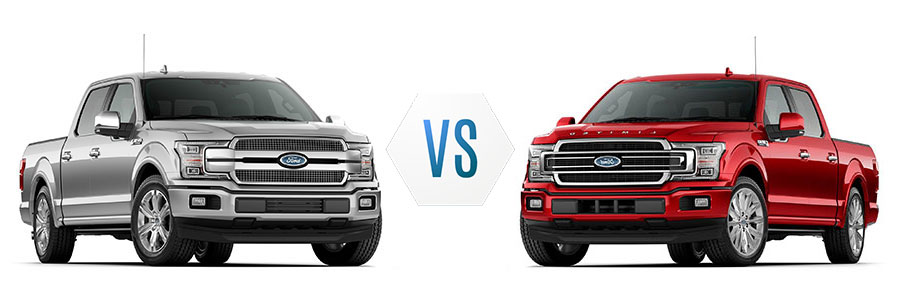
2019 Ford F-150 Limited vs Platinum
What’s the difference between the 2019 Ford F-150 Limited and Platinum trim models? These trucks are both focused on high-end luxury and a sturdy performance. But to really tell the difference between them, you need to look closer.

2019 Ford F-150 vs Toyota Tundra
You can plan for rugged adventure and high-end comfort in both the 2019 Ford F-150 and Toyota Tundra, but you can only choose one. So which is the best truck for your daily drive? Our comparison guide takes a close look at these full-size trucks, helping you make this important choice.

2019 Ford F-150 vs Ford F-250
Both the 2019 Ford F-150 and Ford F-250 are built for a tough workday performance and off-road adventure. Which is right for you? Choosing between them is really a matter of personal necessity. Read on to figure out which truck best suits what you need out of a truck.

2019 Ford Ranger vs Ford F-150
Before you decide between the midsize 2019 Ford Ranger and full-size Ford F-150, there are a few things you need to do. First, think about what you want out of your truck’s daily drive. Next, figure out what exactly it is that you need to tow and haul. Then, read our comparison guide to figure out which one of these classic Ford trucks is your best option.

Ford F-150
The Ford F-150 is one of the longest running models in the world. Today, the F-150 is the truck to beat in the half-ton pickup class. Earning its reputation by constantly keeping ahead of its rivals in towing and payload capacity, the Ford pickup is the best-selling vehicle in America. Yes, you heard that right. The F-150 is number one.

2019 Ford F-150 King Ranch vs Platinum
Are you a cowboy or a city slicker? Is it home, home on the range or master of the urban jungle? Country or downtown? That might be simplifying things because we’re sure the King Ranch would look great cruising downtown and the Platinum can sling some mud around. But if we were to go by looks and features, the King Ranch belongs in wide open spaces while the Platinum seems at home on the city streets.

2019 Ford F-150 vs Nissan Titan
Spoiler warning: This comparison guide isn’t much of a contest. Take your pick of comparison points, the 2019 Ford F-150 is a smarter investment and more of a truck than its rival, the Nissan Titan. Still, we’re here to do our due diligence, so we’ll crunch the numbers and run through the lists of features so you can see for yourself.

2019 Ford F-150 vs Chevrolet Silverado 1500
The biggest vehicle rivalry in the United States is the one between the Ford F-150 and Chevy Silverado 1500. And it's easy to see why. Both these pickups boast powerful engines, off-roading capability, and lots of work-hard-play-hard potential. Yes, this rivalry is a heated one, very close in most ways.

2019 Ford F-150 vs Toyota Tacoma
You might think a compact pickup will be more than enough. They're nearly the same, right? Besides a difference of scale, what do you get from a bigger truck? We can't speak for all pickup trucks everywhere, but there are some distinct advantages buying a 2019 Ford F-150 over getting, say, a Toyota Tacoma.

2019 Ford F-150 vs Ram 1500
The Ford F-150 has been the reigning champion for years now. But there is the smell of new competition. The Ram 1500 has been fully designed for the 2019 model year. Now entering its fifth generation, the Ram 1500 is boasting reduced weight, more passenger space, and a timelier transmission thanks to an all-new mild hybrid system.

2019 Ford F-150
The best-selling truck in America just got a little better. 2018 was a banner year for the F-150, putting up sales numbers they haven't seen since the record-setting 2004 model year. Ford ups the ante with a number of improvements to its flagship model.

2019 Ford F-150 vs 2018 Ford F-150
A completely new revamp of the Ford F-150 debuted in 2015. But if you think that every model year of the Ford F-150 since then is the same as the one before it, think again. Ford keeps rolling out new options, new features, and new reasons to buy new. In this comparison guide, we hope to show you what we mean.

2018 Ford F-150 vs Chevrolet Colorado
In this comparison guide, we'll put the 2018 Ford F-150 next to the Chevrolet Colorado of the same model year. One thing becomes immediately apparent. The Ford F-150 is taller, wider, and, in some cabin configurations, much longer.

2018 Ford F-150 vs Nissan Titan
If you look at Nissan's websites, they praise the 2018 Nissan Titan for its horsepower, beating out even that of the Ford F-150. But a closer look at the numbers shows how horsepower alone is an unreliable gauge of power.

2018 Ford F-150 vs GMC Sierra 1500
Every year, a slew of pickup truck models try to knock the Ford F-150 from the top of the lists. But critics and buyers continue to praise and prefer the F-150, and once you start looking at it, it's not hard to see why.

2018 Ford F-150 vs Toyota Tacoma
Midsize pickups are becoming increasingly popular, so let's put one of them to the ultimate test by pitting the Toyota Tacoma head-to-head against the all-conquering 2018 Ford F-150.

Used Ford F-150 What You Need to Know Before Buying
Buying a used Ford F-150 is the best way to get an excellent deal on these extremely capable trucks. The modern generation of F-150s is especially impressive, improving on other generations' towing and hauling capabilities, overall maneuverability, and even fuel economy ratings.

2018 Ford F-150 vs Toyota Tundra
There are plenty of automakers who'd love a bigger slice of the lucrative full-size pickup truck market, but our big domestic manufacturers continue to rule supreme. Toyota is one of those trying to pinch sales from the usual suspects so let's see how the Toyota Tundra measures up to America's favorite vehicle of all: the 2018 Ford F-150.

2018 Ford F-150 Lariat vs King Ranch
If you're reading this, you're wondering if you should be the best or the best of the best. The F-150 Platinum is a feat of luxurious design while the Limited might make you forget you're driving a pickup, until you check your rearview mirror and see the trailer in tow.

2018 Ford F-150
With so much all-around goodness, you might wonder if the 2018 Ford F-150 is pickup perfection.

2018 Ford F-150 vs Ram 1500
For full-size power and utility, you can't beat modern pickup trucks like the 2018 Ford F-150 and Ram 1500.
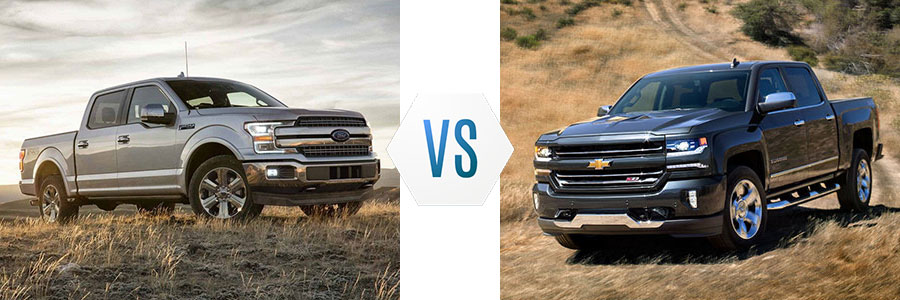
2018 Ford F-150 vs Chevy Silverado 1500
It's a good time to be a truck owner. Trucks are selling better and boast better reviews than ever before. Ford moved more than a million F-150s last year. The Silverado and the mechanically identical GMC Sierra together sold almost as many. The horsepower and torque of these work machines continues to smash records--and that's not to mention their multiplying creature comforts and tech options, which has led to a dizzying array of options

2018 Ford F-150 King Ranch vs Platinum
Like most pickup trucks, the Ford F-150 comes in a dazzling array of trim levels and configurations. You can choose between everything from bare-bones workhorses to truly luxurious pickups. Here we look at the Texas-inspired King Ranch and the opulent Platinum. Both boast all-leather heated seats inside, host a ton of tech features, and drip with chrome.

2020 Ford F-150 vs GMC Sierra 1500
Ford’s trucks are always impressive with their towing and handling capacities, not to mention their additional luxury and technology features. The full-size Ford F-150 pickup truck is no exception with its toughness, yet modern look, making it one of the most versatile trucks available. The new 2020 GMC Sierra 1500 is also an option when looking for a full-size truck. Let’s look at the comparisons.

2020 Ford Expedition vs F-150
The 2020 Ford Expedition and Ford F-150 both sit near the top in their SUV and full-size truck rankings. Both are great vehicles, but let’s compare the two as we look at the convenience package of an SUV to a full-size truck.
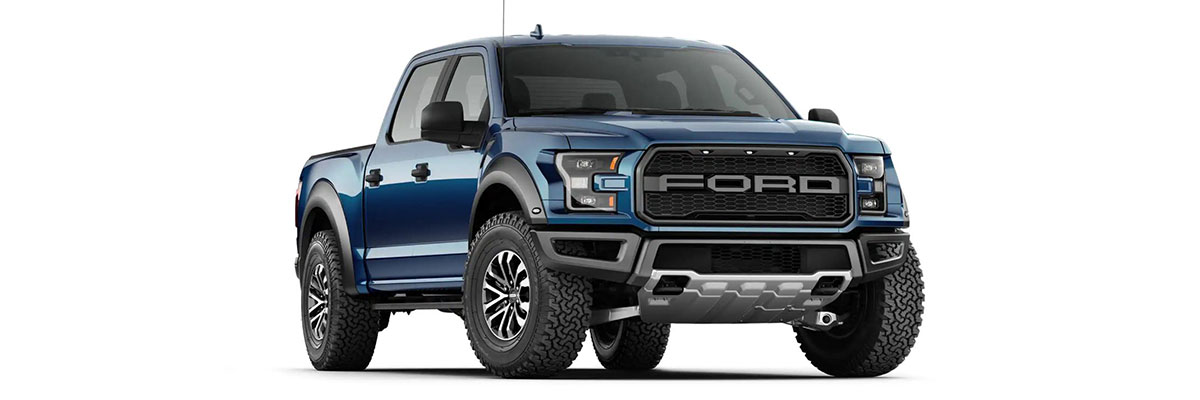
2020 Ford F-150 Raptor
Work hard and play harder in the off-road-ready 2020 Ford F-150 Raptor truck.

2021 Ford F-150 vs GMC Sierra 1500
The all-new 2021 Ford F-150 is redesigned to be tougher and smarter than ever before. With its available 3.5L PowerBoost engine, it is targeted to be the most powerful truck in its class for towing and payload. The 2021 GMC Sierra doesn’t see many changes for this model year, but offers plenty of features and engine options to make this full-size truck well-rounded. Let’s compare the two.

2021 Ford F-150 Tremor Preview
The F-150 Tremor is an all-new model in Ford’s line-up, and is expected to be available for summer 2021. Its rugged features are built for off-roading with new hardware and the latest technology to tackle rugged terrain.

2021 Ford F-150 vs Chevrolet Silverado 1500
The all-new 2021 Ford F-150 is redesigned to be the toughest, most productive F-150 ever. It features an all-new interior, best-in-class available towing and payload, and a class-exclusive Pro Power Onboard to give you the ability to use your truck like a mobile generator. The 2021 Silverado 1500 is just as capable. Redesigned for 2021, the Silverado has revamped styling, a revised engine lineup, and an updated features list. Hard to choose. Let’s see which truck is best for you.

2021 Ford F-150 vs Ram 1500
The all-new 2021 Ford F-150 will be new from grille to tailgate for 2021. It is redesigned to be tougher and smarter than ever before. With its available 3.5L PowerBoost engine, it's targeted to be the most powerful truck in its class for towing and payload. Let’s put it up against the 2021 Ram 1500 and you can make your choice. If you’re in the Colorado area, don’t pass up a chance to take a look at Ford’s newly redesigned Ford-150 at Brighton Ford.

2020 Ford F-150 vs Toyota Tundra
The 2020 Ford 150 has you covered with its impressive towing and handling capabilities. This full-size pickup is not only tough, but modern and versatile. The 2020 Toyota Tundra is a full-size truck to compare, but is outdated and falls short in most categories. If you are in the Denver area, let Brighton Ford take you for a ride.

2020 Ford F-150 vs Nissan Titan
The 2020 Ford F-150 is a great truck that consistently places near the top of full-size pickup truck rankings. The full-size Ford F-150 pickup is not only tough, but modern and versatile, with impressive towing and handling capabilities. The 2020 Nissan Titan is also an option when looking for a full-size truck, but the Ford-150 continues to lead the class. Let Brighton Ford take care of you when making your choice.

2020 Ford F-150 vs Ram 1500
The full-size Ford F-150 pickup is not only tough, but modern and versatile. Ford has you covered with impressive towing and handling capabilities. The new 2020 Ram 1500 is also an option when looking for a full-size truck. Let Brighton Ford take care of you when making your choice.

2020 Ford Ranger or F-150
When it comes to trucks, Ford delivers. The 2020 Ford Ranger and F-150 are no exceptions. Two great trucks, but two different sizes. Let’s help you decide if a compact or full-size truck is your best option. If you are in the Denver area, Brighton Ford is here for you.
